

Summary
- Skyvia – a strong fit for no-code migrations where the target may be a database, data warehouse, or SaaS application. Its visual mapping is particularly useful when moving operational data between systems that do not share the same structure.
- Fivetran – reliable for mature data teams that want managed warehouse pipelines and automated schema drift handling, but MAR-based pricing needs careful modeling before big backfills or high-change sources.
- Airbyte – flexible and extensible for developer-heavy teams that need custom connectors. Its self-managed version gives teams full infrastructure control, while its managed plans reduce the operational work.
- Informatica PowerCenter – still relevant for enterprises with large existing PowerCenter estates, but standard support for 10.5.x ended in March 2026. I would treat it as a legacy platform to maintain or modernize, not a first-choice tool for a new migration project.
The first export is a bit like opening the storage room before moving offices.
From the outside, the job sounds simple: take everything from the old place and put it in the new one.
Then someone opens the door.
There are boxes with no labels and folders called “final”. A cable nobody recognises, but nobody wants to throw away. One cabinet belongs to finance, except sales has been using the bottom drawer for years. And, somehow, there is a spreadsheet from 2018 that still matters.
Data migration works the same way.
Sometimes you get lucky. The tables are clean, the IDs match, the dates behave, and the target system accepts the data without much complaining.
Most of the time, the export has a different story.
Customer IDs are missing. Date fields use several formats. A “required” column is empty in hundreds of rows. Product names follow old rules. Some CSV files look like they were edited by five people over six years, because they probably were.
That is the moment when migration stops being a copy job.
Now you are cleaning, mapping, validating, checking what failed, and trying not to interrupt the business while everything moves. The records still need to get from PostgreSQL to BigQuery, from Salesforce to Snowflake, or from a legacy CRM into a new system. But the harder part is making sure the data still makes sense when it arrives.
That is why choosing among data migration tools in 2026 is not really about who has the longest list of connectors.
I care more about what happens when the work gets messy.
Can the tool show which rows failed? Can it rerun only the broken part? Can it handle a new column halfway through the job? Can someone read the logs without waiting for an engineer to translate them? Can the pricing survive a large backfill without turning into its own meeting?
For this review, our engineering team and I tested several leading platforms in isolated environments. We moved 1 million records from PostgreSQL into Google BigQuery, introduced a schema change during the sync, and looked at setup effort, sync behavior, pricing transparency, and how much custom work each platform required.
Quick disclosure: I work on the Skyvia side of this market. We build a no-code data integration platform, so no, I am not a neutral reviewer floating above the category.
At the same time, I don ‘t think every team should pick Skyvia.
Some should use Fivetran or Airbyte. Some teams already have years of PowerCenter workloads they cannot simply replace, which is a different problem from choosing a platform for a new migration. But everything depends on the case.
The point here is simpler: show where each tool makes sense, where it starts to feel like the wrong fit, and what your team will actually have to own after the first successful run.
How Did We Test These Data Migration Tools?
For this review, our engineering team and I spent about a week setting up, breaking, rerunning, and comparing the tools in isolated environments.
Not in a perfect demo setup. We wanted something closer to the kind of migration that looks reasonable at the start and then starts asking questions back.
The test was simple on paper:
Move 1 million records from PostgreSQL to Google BigQuery.
That was the clean version of the task.
Then we made it less polite.
Halfway through the sync, we changed the source schema by adding a new column. Nothing exotic. Just the kind of thing that happens all the time when a CRM admin adds a field, a product team changes tracking, or someone updates a database table without warning the reporting team.
That one change told us a lot.
Some tools handled it quietly. Some needed more attention. Some made the problem easy to see. Others made us dig around longer than I’d like.
We looked at five things during the test:
- Initial sync speed. How long did it take to move the first 1 million records into BigQuery?
- Schema drift behavior. What happened when the source table changed during the migration?
- Failure visibility. Could we quickly understand what failed, where it failed, and what needed to be rerun?
- API and setup complexity. Did the tool feel like a visual setup flow, or did it turn into scripts, containers, credentials, and environment work?
- Pricing transparency. Could we explain the cost before the migration ran at full size, or did we need to model every possible backfill, resync, and changed row?
Here, I’d also think about the real daily routine, like who would actually own this after the first successful run?
Because that is where a lot of migration projects get uncomfortable. A tool can look great during setup and still become a problem if only one person understands how to restart it, read the logs, or fix a broken mapping.
The goal was not to crown one universal winner. That usually does not help anyone.
Instead, we wanted to see where each platform made sense: Fivetran for managed pipelines, Airbyte for developer-heavy control, Informatica PowerCenter for enterprise complexity, and Skyvia for no-code teams that need the data moved without turning the migration into a full engineering project.
What Are the Key Comparison Criteria for Data Migration in 2026?
A migration tool can look great in a demo and still be the wrong fit once real data shows up.
That is why I would not start with the usual feature checklist. Almost every serious platform can connect to popular databases, schedule jobs, and move data into a warehouse. The real difference is what the tool asks from your team after that.
For this review, I was keeping in mind how pricing behaves, how often the pipeline can run, and how much technical ownership the setup needs.
Pricing model: where the surprise usually hides
Pricing is not the most exciting part of a migration project until it suddenly is.
This usually happens during a backfill.
A normal daily sync may look harmless. Then you move a large historical table, reload a source, or update thousands of records at once, and the pricing model starts showing its teeth.
The main models I paid attention to were:
Monthly Active Rows, or MAR
This is the model people usually associate with Fivetran. You are not only thinking about how many records exist in the source. You are thinking about how many records are inserted, updated, or deleted during the billing period.
That can work well when the team understands its change volume. But it also means that a busy source, a large resync, or a messy backfill can quickly change the cost picture.
Compute-based pricing
This shows up more often in open-source or infrastructure-heavy setups. Airbyte self-hosted is the obvious example. The license may be free, but the work still has to run somewhere.
So, the cost moves into cloud infrastructure, worker size, storage, orchestration, monitoring, and DevOps time. It can be cheaper at scale if the team knows what it is doing. It can also become one of those “free” systems that quietly eats engineering hours.
Transparent volume-based pricing
This is the model Skyvia uses. The main question is how much data you move, not how many users you have or how many connectors you turned on.
I like this model for teams that need to explain the budget before the migration starts. You still need to know your volume. No tool removes that. But it is easier to plan around a clear usage tier than to guess what a source with heavy updates might do to the bill next month.
The short version: pricing should be tested against your worst migration day, not your calmest one.
Migration cadence: one-time load or temporary sync?
Data migration is not always a single move from one system to another. In many projects, the old and new systems have to run side by side for some time, so data needs to keep moving between them until cutover or even after it. Depending on the project, this may be a one-time load, a temporary incremental sync, or an ongoing synchronization between two systems.
So, I would look at these scenarios:
One-time batch migration
Best when the source can be paused, and the business accepts a clear maintenance window.
Staged migration with temporary incremental sync
Best when historical data can move first, but new changes must continue flowing until cutover.
Note: In some cases, both systems stay in use after the migration. The temporary sync then becomes an ongoing data synchronization process rather than part of the migration itself.
The right option depends less on the fastest available schedule and more on how much downtime, data lag, and overlap the business can accept.
API and setup complexity: who has to keep this thing alive?
This is the part many comparison tables soften too much.
Some tools feel like a guided setup. You connect the source, connect the destination, choose objects or tables, set the schedule, and run the job.
Others give you much more control, but they also expect more from the team. Docker. Kubernetes. Worker sizing. Connector configuration. Environment variables. Logs that make sense only if you know where to look.
Neither approach is automatically better.
It depends on who owns the migration.
If a data engineering team is running the project, a more technical tool may be fine. They may want version control, custom connectors, direct access to logs, and full control over how the pipeline behaves.
If the owner is an analyst, RevOps manager, consultant, systems admin, or small data team, that same flexibility can turn into a burden. They need to move data, validate the result, and understand failures without turning every issue into a development task.
That is why setup complexity matters as much as connector coverage.
A visual SaaS tool can be a better fit when the job is common and the team wants speed. A developer-first or self-hosted tool can be better when the source is unusual, the environment is locked down, or the team needs to build custom logic around the migration.
My practical test
Before choosing any platform, I would ask these questions:
- What happens to the bill during a large backfill?
- How quickly does the data actually need to refresh?
- Who will restart the job when it fails?
- Can the team understand the logs without a specialist?
- What happens when the source schema changes halfway through?
- Is this a one-time migration, or will it become a pipeline that runs for years?
Those questions are not as exciting as a connector list.
But they are much closer to how data migration projects succeed or fail.
How Do the Top Tools Stack Up?
Before the detailed review, here is the quick comparison.
| Feature / Metric | Skyvia | Fivetran | Airbyte | Informatica PowerCenter |
|---|---|---|---|---|
| Feature / Metric | Skyvia | Fivetran | Airbyte | Informatica PowerCenter |
| Best for | Visual, no-code migration. Best when the team needs data moved without writing scripts. | Managed enterprise ELT. Best when a data team wants pipelines to run with little daily maintenance. | Developer-owned pipelines. Best when engineers need control over connectors and deployment. | Complex enterprise migration. Best when governance, legacy systems, and hybrid deployment matter. |
| Pricing model | Volume-based pricing. Cost is easier to plan around expected data volume. | Monthly Active Rows. Cost depends on how many rows change during the billing period. | Core is free and self-managed, but infrastructure and maintenance still cost money. Managed plans use volume-based or capacity-based pricing. | Custom quote. Pricing depends on the licensing model, data volume, deployment, selected modules, and support requirements. |
| Sync frequency | Can run as often as every 1 minute on higher-tier plans. | Often 1 to 15 minutes, depending on connector and plan. | Usually 5 minutes or more, depending on setup. | Supports real-time and batch patterns. Setup depends on architecture. |
| API and infrastructure complexity | Low. Skyvia is SaaS-based. | Low. Fivetran manages most of the infrastructure. | High for self-managed deployments, where the team owns hosting, scaling, and upgrades. Lower with Airbyte’s fully managed plans. | Very high. Powerful, but not lightweight to administer. |
| Schema Drift | Refresh-based handling. Skyvia can accommodate supported source-schema changes after metadata is refreshed. New fields can then be added to the migration or sync workflow without rebuilding it from scratch. Renamed or removed fields may still need manual review before the next run. | Strong automated handling. Fivetran detects many source-schema changes and can propagate additions and other supported changes to the destination. Schema handling policies can also be configured, although downstream models may still need attention after breaking changes. | Configurable automatic propagation. Airbyte can detect source-schema changes and propagate selected column or stream changes automatically. More disruptive changes may stop the sync and require review. | Controlled, but maintenance-heavy. Source definitions can be updated or reimported, and changes propagate into mappings. Renames, datatype changes, or removed columns can invalidate mappings and require manual review. |
Which Data Migration Tool Fits Your Specific Scenario?
Migration tools are often grouped by deployment, licensing model, or the way they process data. Is the platform cloud-based or self-hosted? Open-source or commercial? Built mainly for ETL, ELT, replication, or broader integration?
Those labels can help narrow the market, but they don’t always tell you whether a tool fits the actual project. A platform can be cloud-based, commercial, and ELT-focused at the same time. What matters more is the type of migration, who will manage it, and how much control the team needs.
Nobody starts a migration by saying, “I need one cloud-based tool from category A.”
They usually start with a much messier sentence:
“We need to move this data without breaking reporting.”
Or:
“We need to get out of these scripts because nobody wants to maintain them.”
Or:
“We have a legacy system, strict governance rules, and too many downstream teams to make mistakes.”
That is why I narrowed this review to four tools. Not because the others do not exist, but because these four represent the main situations I see teams run into.
The next sections go deeper into each scenario, with the trade-offs that did not fit neatly into the table.
Which Tool is Best for No-Code Business Teams?
Skyvia
Skyvia makes the most sense when the job is real, the deadline is real, and nobody on the team wants to turn a routine sync into a side project.
That is the lane it fits.
Not every company has a data engineer waiting around to wire HubSpot into Snowflake, move customer data out of an old CRM, or clean up a CSV export from a system everyone is trying to retire. Sometimes the person doing the work is a marketing ops manager, a data analyst, a RevOps lead, or an IT generalist who just needs the data to move and keep moving.
That is where Skyvia feels practical.
The interface is visual, the setup is no-code, and the platform covers more than 200 connectors across SaaS apps, databases, cloud storage, and warehouses. You are not building the pipeline from scratch. You are connecting systems, choosing what should move, mapping fields, setting the schedule, and checking the run history if something goes wrong.
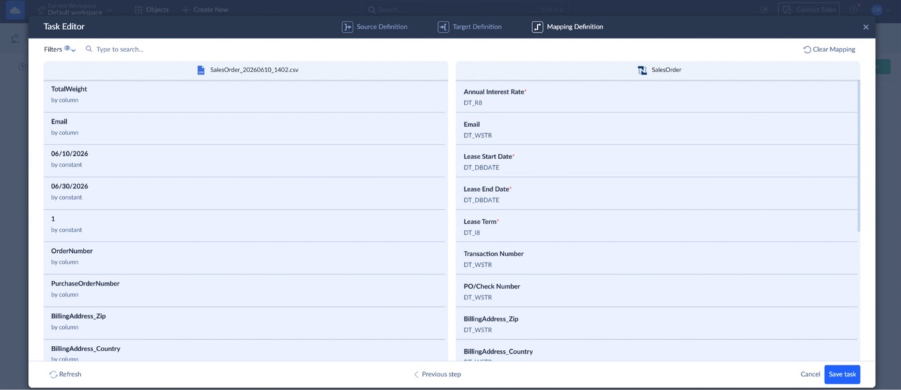
What I like most here is not the connector count. It is the pricing model.
Skyvia charges by data volume, which is a lot easier to explain than a model where every changed row turns into a billing puzzle. A migration or sync project is stressful enough without needing a second spreadsheet just to estimate next month’s connector bill.
The first load is rarely the end of the story. Once the data is in the new system, teams often realize they still need updates from the old one for a while. Maybe daily. Maybe every hour. Maybe only when the source changes. That is where a plain loader starts to feel too small, and a tool with replication and synchronization support makes more sense.
Best for
Skyvia is best for teams that value a simple visual setup and predictable volume-based pricing over deep infrastructure control.
Its strongest use case is not limited to moving data into a warehouse. A team can take data from a database or an older business system, map it to a different structure, and load it directly into a SaaS application without building the migration in code.
That can mean moving customer records from a legacy CRM into Salesforce or HubSpot, switching between SaaS platforms, or replacing an old operational system with a newer cloud application. This is a different job from copying tables into Snowflake or BigQuery for analytics.
I’d consider Skyvia when the team already knows what needs to move but doesn’t want to build and maintain scripts around it. The same setup can also stay useful after the migration, for example, when the one-time move turns into a scheduled sync.
Rating
- G2: 4.8/5 (324 reviews)
- Capterra: 4.9 / 5 (116 reviews)
Pricing
Skyvia uses transparent volume-based pricing. In plain terms, you pay for the amount of data you process, not for hidden row-multiplier logic.
That makes planning much easier, especially for businesses that need to know what the project will cost before they scale it.
Pros
- True no-code setup with a visual wizard.
- Transparent pricing based on actual data volume.
- 200 + connectors across apps, databases, files, and warehouses.
- Supports one-time migrations, recurring replication, bulk transfers, and bidirectional synchronization.
- Good fit for analysts, RevOps, and business teams that need results without writing code.
Cons
Skyvia is a fully cloud-native SaaS platform.
That is fine for most teams, but it rules the product out in very restricted environments. If your company works in a sector where absolutely no internet-connected SaaS tool is allowed, and everything has to stay inside an air-gapped on-premise setup, Skyvia will not fit that requirement.
In that case, I would look at something heavier like Informatica.

Which Tool is Best for Enterprise & High-Volume Legacy Data?
Informatica PowerCenter
Informatica PowerCenter needs a different introduction in 2026.
It is still running some very large and complicated enterprise data estates. The mappings are mature, the teams know the platform, and replacing years of ETL logic is not something a bank or manufacturer does over a weekend.
But I would not recommend PowerCenter as a new deployment today.
PowerCenter 10.5.x reached the end of standard support on March 31, 2026. Customers can use paid Extended Support through March 31, 2027, followed by Sustaining Support through March 2029. That gives existing installations more time, but it does not put PowerCenter back on a long-term product roadmap.
That changes how I look at the platform.
The mapping and workflow controls are still extensive. PowerCenter can handle complicated transformations, large batch workloads, hybrid environments, and the kind of legacy dependencies that accumulate over many years. Those strengths did not disappear when standard support ended.
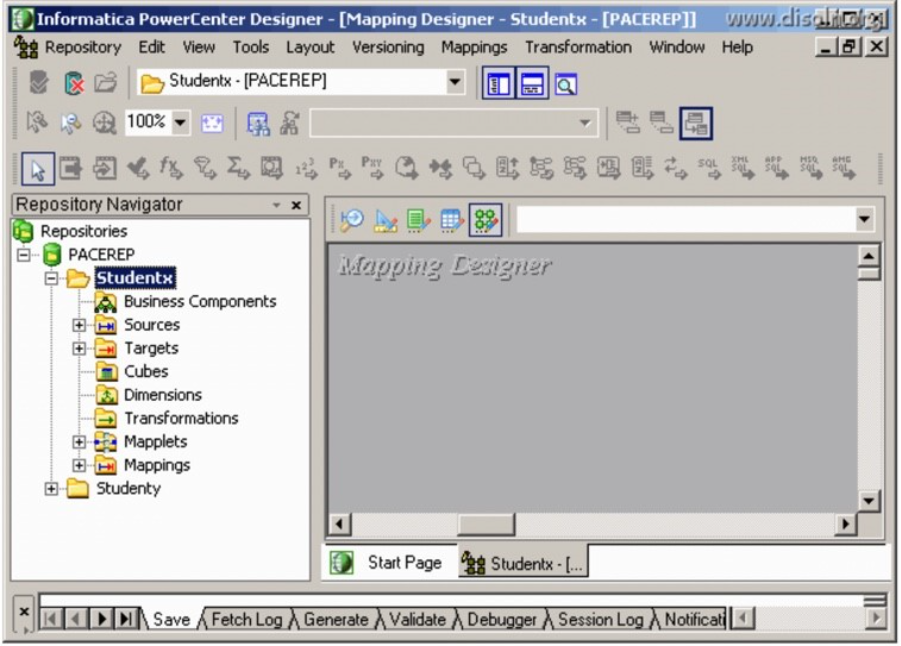
Informatica’s own direction is toward its Intelligent Data Management Cloud. It offers modernization paths that let PowerCenter customers reuse existing assets and gradually move workloads toward Cloud Data Integration rather than rebuild everything at once.
Best for
I would keep PowerCenter in this comparison for organizations that already have a substantial PowerCenter estate.
It still makes sense when removing it immediately would introduce more risk than keeping it temporarily: thousands of existing mappings, old on-premise systems, complex batch jobs, strict audit requirements, or an integration team that already knows the platform.
For a company choosing a new migration platform in 2026, I would look elsewhere or evaluate Informatica’s current cloud products instead.
Rating
- G2:4.3/5 (90 reviews)
- Capterra: No reviews yet
Pricing
PowerCenter has historically been sold through enterprise licensing agreements, and Informatica does not publish a simple current public price for the legacy product. Existing customers also need to account for the cost of Extended or Sustaining Support if they plan to remain on PowerCenter beyond standard support.
So, for PowerCenter, the meaningful number is whatever sits in the customer’s existing license, maintenance, and support agreement.
Pros
- Mature mapping and transformation capabilities for complicated ETL estates.
- Strong fit for legacy and hybrid environments already built around PowerCenter.
- Detailed workflow control and monitoring.
- Large installed base and experienced enterprise integration teams.
- Existing PowerCenter assets can be part of Informatica’s modernization path to IDMC.
Cons
The biggest drawback in 2026 is no longer the learning curve. It is the product lifecycle.
Standard support for PowerCenter 10.5.x has already ended. Extended and Sustaining Support buy existing customers time, but they should be treated as migration runway rather than a reason to start a new PowerCenter implementation.
There is also the operational weight. PowerCenter needs people who understand the platform, its infrastructure, mappings, upgrades, and dependencies. That was acceptable when it was the strategic enterprise ETL platform. It is harder to justify for a new project when Informatica itself is moving customers toward IDMC.
Which Tool is Best for Developer-Heavy Teams Requiring Custom Connectors?
Airbyte
Airbyte is the tool I would bring up when the source is awkward.
Not “awkward” as in slightly annoying. I mean the kind of source that does not sit neatly inside a managed connector catalog.
An internal API.
A niche SaaS product.
A custom endpoint with strange pagination.
A database that needs a specific extraction pattern.
A team that wants to see what the connector is actually doing.
That is where Airbyte makes sense.
It is open-source, community-driven, and built for teams that want more control over how data moves. Airbyte also leans heavily into connector extensibility: its own connector page describes a no-code connector builder, a low-code CDK, and language-specific CDKs for building custom connectors.
That flexibility is the good part.
The less fun part is that flexibility does not maintain itself.
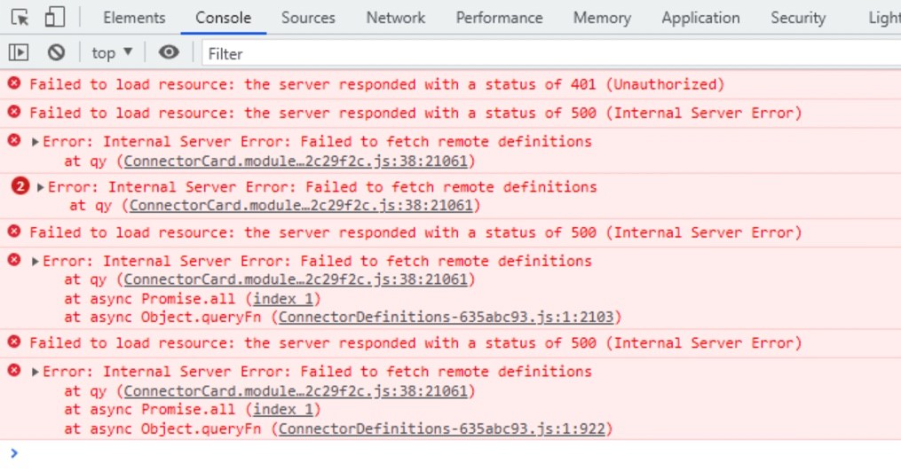
During our test, Airbyte gave us plenty of room to work close to the system. But that also meant more pieces to watch: workers, connector behavior, logs, memory, deployment settings, and the environment around the pipeline.
While pulling 1 million rows, I noticed a clear memory spike on the source worker container. The job did not feel like something I would hand to a non-technical team and walk away from. If the nodes are not sized properly, pipelines can slow down, stall, or crash.
That is not a reason to avoid Airbyte.
It is just the deal you make with it.
You get control. You also get the responsibility for the parts that control depends on.
Best for
If you have a team of data engineers who like writing Python, building connectors, and managing Docker containers, Airbyte can be fantastic.
I would consider it when:
- The source is not well covered by managed tools.
- The team needs to build or modify connectors.
- Self-hosting is a requirement.
- Infrastructure ownership is acceptable.
- Engineers want control over how syncs run.
- The migration is part of a larger custom data platform.
I would be more careful if the migration owner is an analyst, RevOps manager, or small IT team that just needs data moved into a warehouse. Airbyte can do the work, but someone still has to own the machinery.
Rating
- G2: 4.4/5 (77 reviews)
- Capterra: No reviews yet
Pricing
Airbyte’s pricing depends on how you run it.
The open-source version can be self-hosted, so the license cost is not the main issue. The real cost moves into infrastructure, compute, monitoring, maintenance, and engineering time.
For managed plans, Airbyte’s official pricing page lists several tiers and describes Pro pricing as capacity-based, built around Data Workers.
My practical read: Airbyte can be cost-effective when the team already has the engineering muscle to run it. It becomes less attractive when “free” turns into a second infrastructure project.
Pros
- Open-source flexibility for teams that want control over the stack.
- Strong fit for custom connectors and unusual APIs.
- Connector Builder and CDK options for building or adapting sources.
- Self-hosting option for teams that need infrastructure control.
- Good fit for developer-heavy teams building a broader data platform.
Cons
Infrastructure overhead is the main one.
During our 1M-row pull, the source worker container showed a noticeable memory spike. That is exactly the kind of thing that matters in production. If the environment is undersized, the pipeline can become unstable fast.
Airbyte also expects someone technical to stay close to the system. Failed syncs, connector changes, worker sizing, upgrades, logs, and deployment issues do not disappear because the tool is open-source.
For teams with strong engineering resources, that tradeoff may be fine.
For teams that just want a migration to run without adding another platform to maintain, it can be more work than expected.
Which Tool is Best for Fully Managed, “Set-and-Forget” Pipelines?
Fivetran
Fivetran is the tool I would expect to see when a data team wants the pipeline to mostly take care of itself.
That is the promise, at least.
You connect the source, point it at the warehouse, choose what should sync, and let Fivetran handle a lot of the work that usually eats engineering time: connector maintenance, sync logic, schema updates, and load behavior.
In our test, schema drift was the place where Fivetran looked strongest.
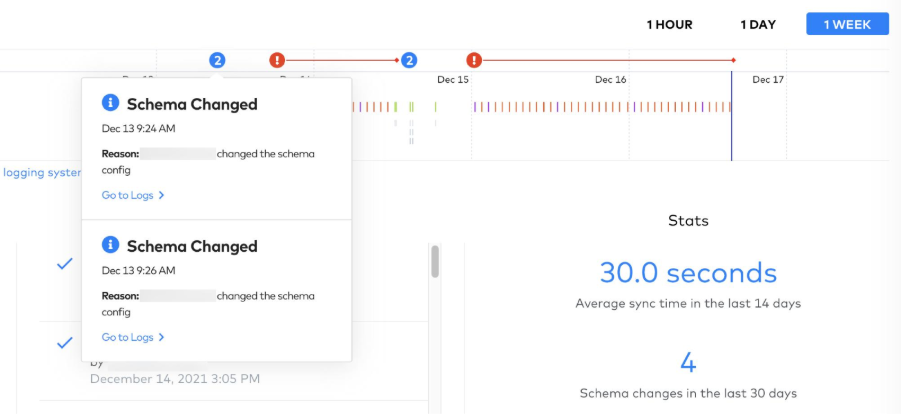
That is why Fivetran has become one of the default names in managed ELT.
It is also why I would not dismiss the cost conversation as a finance-only detail.
Fivetran pricing is based on Monthly Active Rows, or MAR. Their pricing page defines monthly usage as the number of MAR processed in a calendar month, including inserted, updated and deleted rows, while unchanged rows and initial syncs are excluded.
That model is not automatically bad. It just needs to be understood.
A quiet pipeline can look predictable. Then a busy SaaS source, a large resync, or a non-relational source with normalized child tables can change the math. You may think of the job as “100k records”, but the billed activity can feel much larger once updates, deletes, nested records, and table expansion come into play.
Fivetran also moved pricing tiering from the account level to the connection level in its 2025 pricing updates, which matters for teams with several similar-sized connectors rather than one dominant source.
So yes, Fivetran is strong if you want managed reliability.
I just would not call it “set and forget” until someone has modeled the MAR side against a bad week, not only a normal one.
Best for
Fivetran fits mature data teams that want managed warehouse pipelines and do not want to maintain connector code themselves.
I would look at it when:
- The team has many standard SaaS or database sources.
- The destination is a warehouse like Snowflake, BigQuery, Redshift, or Databricks.
- Automated schema drift handling is more important than deep customization.
- The team already has data engineers or analytics engineers who can model downstream transformations.
- Budget is less sensitive than pipeline maintenance time.
- The team can forecast MAR before a large rollout.
It is less attractive when the migration owner needs predictable cost above all else, or when the source is unusual enough that a managed connector does not give enough control.
Rating
- G2: 4.3/5 (824 reviews)
- Capterra: 4.4/5 (25 reviews)
Pricing
Fivetran charges mainly through Monthly Active Rows, or MAR. A row becomes billable when it is inserted, updated, or deleted, and the same row is counted only once during a calendar month even if it changes several times.
The initial historical sync is treated differently. According to Fivetran’s pricing documentation, the bulk historical data loaded when a connection is first created is excluded from paid MAR.
Re-syncs are separate from normal incremental usage as well. Historical rows that have not changed are generally not billed again during a re-sync. If Fivetran finds rows that are genuinely new or modified, those rows can still contribute to MAR.
That distinction matters when estimating cost. Loading ten million existing rows for the first time is not the same billing event as having ten million rows become active through inserts, updates, or deletes later.
Pros
- Strong automated schema drift handling for supported connectors.
- Very low day-to-day maintenance compared with scripts or self-hosted tools.
- Reliable CDC options for databases and enterprise sources.
- Broad connector catalog for standard SaaS apps, databases, and warehouses.
- Good fit for teams that want ingestion handled and prefer to do transformation downstream.
Cons
The cost can be hard to predict if the team does not understand MAR.
Because Fivetran normalizes some non-relational sources into relational tables, one source object may produce records across several destination tables. Frequent changes, deletes, History Mode, and overlapping connections can therefore produce more paid MAR than a simple source-record count suggests.
That is the main tradeoff.
Fivetran takes a lot of maintenance off your plate, but you pay for that convenience through a usage model that needs careful planning. For a large data team, that can be completely reasonable. For a smaller team with volatile source data, it can become uncomfortable faster than expected.
What Are the Most Common Data Migration Pitfalls I’ve Encountered?
The ugly part of data migration is that the big failures rarely start big.
At the beginning, most migration problems don’t look like the big trouble.
A column mapping is slightly off. Some IDs are not as unique as everyone hoped. The API limit looks fine during testing because the sample is tiny.
A few years ago, I learned this during a HubSpot-to-Redshift migration.
At the start, the plan looked harmless. Pull contacts from HubSpot, clean up a few fields, load them into Redshift, and let the reporting team build from there. We used a basic custom script because the first version seemed too small to justify a proper pipeline tool.
The test run did not tell us much. There wasn’t enough data to hit the API limits, and the duplicate cases we later found weren’t in that sample.
The full load was different. HubSpot began returning rate-limit errors, and the retries left us with a mix of completed, repeated, and missing records. Our dedupe rule also failed on cases we had not planned for.
The reporting team caught most of the issues when their numbers did not match HubSpot. Since then, I have not taken a clean test run as proof that the full migration will behave the same way.
1. Mapping errors
Mapping took longer than we were thinking. Company Name and Account Name didn’t cause much trouble. Lifecycle Stage and Status did, because the systems used those fields differently even though the labels looked similar.
We could copy the value in seconds. That did not mean we were copying the same rule.
That is not a technical mismatch. It is a business logic mismatch.
A good migration setup should let you review mappings before the run, test them on a small batch, and catch obvious problems before the full load starts.
So, I wouldn’t trust a mapping just because the field names look similar. I have seen fields with almost identical labels carry completely different business meaning.
A small test load usually exposes this faster than another hour spent staring at the mapping screen. Open a few records in the target and check whether the values still make sense there. Pay particular attention to required fields and anything used in reporting, segmentation, or billing.
For the important fields, write down the agreed mapping somewhere the team can refer to later. Nothing fancy. A basic spreadsheet is often enough to prevent the same argument from happening again halfway through the migration.
2. Duplicate records
A migration can finish without reporting a single error and still leave duplicates all over the target.
Maybe email was used as the unique key even though several contacts share an address. Maybe the source and target use different customer IDs. Sometimes the record was already in the target, but the company name was written slightly differently, so the load created another one.
The problem often shows up in reporting first. Customer counts jump, revenue is counted twice, or a sales rep finds two records for the same account.
The safest approach is to define the merge logic before the migration starts.
What is the real unique key?
Email?
Customer ID?
External ID?
Account domain?
A combination of several fields?
If the team cannot answer that question, the tool cannot safely guess it.
So, before loading anything, the team needs to agree on what actually identifies a record. That may be an email address, an external ID, or a combination of fields. Whatever it is, the rule should be clear enough that the same record is not treated as new every time it appears.
Updates need a rule too. Should the incoming value replace the existing one, fill only empty fields, or be sent for review when the two records disagree?
I would also keep questionable records out of the main load. A few rows waiting for review are much easier to deal with than a target full of duplicates that have already made their way into reports.
3. API limits
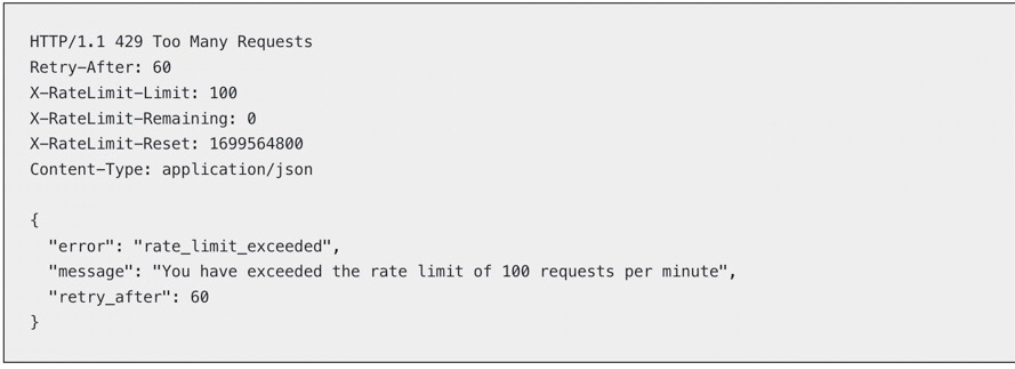
The problem isn’t just the limit itself. The problem is what happens after the limit.
Does the job retry safely?
Does it wait and continue?
Does it skip records?
Does it load partial data and pretend everything is fine?
That is where basic scripts can get risky.
A script can hit a 429, retry the same batch, load part of it twice, and still end with a reassuring “success” message. I have seen that happen.
For a large migration, I would rather make the job slower and easier to follow. Pull only new or changed records where possible. Do not fire off parallel requests just because it makes the test run faster. And keep failed batches separate so they can be checked and rerun without touching everything else.
And I would not use the final row count as the only sign that the migration worked. Failed batches and retry history usually tell you much more about what actually happened during the load.
Conclusion
The best data migration software depends less on which platform has the longest feature list and more on what your team can realistically support.
If you need to build a migration quickly without writing or maintaining code, Skyvia gives you a visual, no-code option at a more accessible cost.
If you have engineers or DevOps resources, do not mind managing the infrastructure, and want to keep software costs down, Airbyte is a sensible option.
If budget is less of a concern and the priority is a managed pipeline with as little maintenance as possible, Fivetran is usually the easier route.
None of these tools lets you skip the checks. I would still run a small batch first, open a few records in the target, and see where the failed rows ended up.
The tool can move the data. It cannot tell you whether “Customer” means the same thing in both systems.

FAQ for Top Data Migration Tools for 2026

What happens to my pipeline if the source database schema changes mid-migration?
It depends on the tool. Some detect new or changed columns automatically, while others stop the pipeline or skip affected data. Schema changes should be logged and reviewed before the migration continues.
Are cloud-based data migration tools safe for highly regulated industries like banking?
They can be, provided the platform supports encryption, access controls, audit logs, and relevant compliance standards. Security also depends on how credentials, permissions, and data access are configured.
Do I need a dedicated data engineer to set up these migration tools?
Not always. No-code tools can handle common migrations without a dedicated engineer. Complex transformations, custom APIs, or strict infrastructure requirements may still require someone with technical experience.
How can I migrate large datasets without slowing down my live production database?
Use incremental extraction, CDC, off-peak schedules, read replicas, and smaller batches. These methods reduce the load on the source system and avoid repeatedly scanning or copying the entire database.
What is the most common reason a cloud data migration fails?
Poor preparation. Incorrect mappings, unclear unique keys, API limits, schema differences, and bad source data cause more failures than the transfer itself. A small test run usually exposes these issues early.