

Summary
- Skyvia: for anyone who values easy workflows, with no-code pipelines and a first one running in under an hour.
- Fivetran + CData Sync: managed replication into your warehouse, whether the source is a modern cloud app (Fivetran) or a legacy Oracle or homegrown billing system (CData).
- Infor Cloverleaf: the hospital veteran that gets every ADT message to labs, imaging, and pharmacy without losing an acknowledgment.
- Estuary Flow: streams changes in under 100 milliseconds, for when seconds change a decision.
- MuleSoft: governs every API a global health system exposes, and who gets to call it.
A single patient visit can scatter data across a dozen systems that have never formally met – an EHR speaking HL7, a billing platform speaking X12, a wearable speaking whatever dialect its manufacturer invented. None of them are wrong. They were just never introduced. That’s the job healthcare data integration exists to do.
“Best” depends entirely on who’s asking. What a 400-bed hospital running decades-old HL7 interfaces needs looks nothing like what a five-person HealthTech startup needs to ship a FHIR app. So instead of crowning one winner, we measured healthcare data integration tools against the standards that matter most – HIPAA readiness, connectivity, reliability, cost.
Ready to get specific?
What Is Healthcare Data Integration and Why Is It Critical for Modern HealthTech?
Healthcare data integration is what turns a pile of disconnected records – EHRs, labs, billing, devices, payer files – into something a clinician or an analyst can trust. It’s why a cardiologist can pull up an allergy history from a visit at a completely different hospital, and why a health plan can calculate a quality score without someone opening five spreadsheets and hoping they line up.
Without it, perfectly accurate, but completely useless data just sits in its own corner. That isolation brings higher clinical risk, more administrative cost, and compliance exposure.
What Are the Differences Between Clinical Message Brokering (EHR/HL7) and Healthcare Analytical Integration (ELT/DWH)?
“Integration” is used as a catch-all term, but two distinct jobs hide under it.
- Clinical message brokering keeps systems synchronized in real time so care can happen safely – HL7 v2.x messages, FHIR resources, the occasional DICOM image, all moving as discrete, event-driven traffic through an interface engine: receive, validate, transform, route, acknowledge. Speed is the whole point. A delayed order message means a delayed decision.
- In analytical integration, data flows into a warehouse through ELT, settles into dimension and fact tables, and gets mapped against OMOP or a similar common model. The process usually takes minutes to hours, longer if you’re moving anything regulatory.
| Dimension | Clinical Message Brokering (EHR/HL7 | Analytical Integration (ELT/DWH) |
|---|---|---|
| Purpose | Real-time sync for care delivery | Historical analytics for reporting and AI |
| Formats | HL7 v2.x, FHIR, DICOM | Relational/columnar tables, OMOP, Parquet |
| Pattern | Interface engine: receive → transform → route | Batch/micro-batch ELT, incremental loads |
| Latency | Seconds to minutes | Minutes to hours, sometimes daily |
| Quality focus | Message validity, patient matching | Mapping accuracy, deduplication, integrity |
| Typical tools | Mirth Connect, Rhapsody, Cloverleaf | Skyvia, Fivetran, Estuary Flow |
| Breaks first | Interface drift, queue backlogs | Silent data loss, stale vocabularies |
Message brokering keeps the clinical conversation flowing. Analytical integration takes that conversation, plus claims and device data, and turns it into a record an organization can use to make decisions. Most mature health systems run both layers, not one standing in for the other.
Why Do Traditional Healthcare Data Pipelines Fail Before Critical Reporting Cycles?
It’s rarely one dramatic failure. Usually, several smaller weaknesses stack up at once.
- Schemas shift, and pipelines don’t notice. EHR vendors change fields and tables on their own schedule; a hand-coded extraction job has no way of knowing until something downstream looks wrong.
- Small losses compound. Each pipeline step might succeed 99% of the time, but a dozen steps in a row can discard a meaningful slice of the intended population.
- Technical checks pass while clinical logic fails. Row counts match, and schemas validate, yet, for example, you get a record where a death date precedes a birth date, or a stale vocabulary maps a diagnosis incorrectly.
- PHI handling gaps freeze everything. Late masking or incomplete audit trails can hold a report in compliance review even after it’s technically loaded.
- Upstream feeds don’t arrive on a clean schedule. A pipeline built for a steady rhythm can process a partial file without realizing it.
The sum of these issues is data showing up, and by the time anyone can use it, the window’s already closing. That lag is a trust killer, and it picks the worst possible moment to strike.
How Did We Evaluate and Compare the Leading Healthcare Data Integration Tools?
Comparing things is an unrewarding job. And when it comes to comparing something that was built to handle different scenarios, that job becomes dangerous. You might slip into grading fish on how well they climb trees. However, we singled out criteria that help you make up your mind.
How Do We Assess HIPAA Readiness, SOC 2 Compliance, and Sensitive PII Hashing?
- BAA coverage, including activation destinations.
- Encryption and key management. TLS/AES-256 as baseline; customer-managed keys and private networking for sensitive deployments.
- RBAC and audit logs – access controls at the field level, plus logs showing who touched what and when.
- SOC 2 Type II, with HITRUST or FedRAMP a plus for larger health systems.
- In-pipeline masking – field-level hashing/tokenization, not just masking at the final destination, which leaves PHI exposed upstream.
How Critical Are Pre-Built Connectors for EHRs, CRMs, Billing Systems, and Cloud Data Warehouses?
- EHR connectors (Epic, Cerner, Meditech, etc.) save months of in-house build.
- CRM and billing connectors are only as good as their PHI handling.
- Warehouse connectors (Snowflake, BigQuery, Databricks) have to work on your team when the schema underneath it changes.
How Do Setup Complexity and Required Engineering Resources Impact Time-to-Value?
- Low-code: pipeline running in days. Code-first: slower to build, easier to bend later.
- Even with pre-built connectors, EHR projects involve security reviews and network setup, interface specification reviews (ISD/FDD), etc.
- OMOP or PCORnet mapping takes time, unless your platform already has the shortcuts built in.
Why Does Pricing Predictability Matter Across Volume-Based, Event-Based, and MAR Models?
| Pricing Model | What’s Metered | Where It Bites |
|---|---|---|
| MAR (Monthly Active Rows) | Rows changed per connection | Multi-destination syncs double-billing the same data |
| Volume/GB-based | Data moved | Large backfills |
| Connection-based | Per connector, per year | Many low-volume sources adding up |
| Capacity/enterprise | Flows, API calls, vCPU | New runtimes or environments |
Healthcare’s irregular batch arrivals (claims, CMS files) and frequent backfills make this worse – model your actual volumes and get written examples of how each vendor counts them.
How Well Does the Platform Support Both Analytical Ingestion (ELT) and Operational Activation (Reverse ETL)?
- Reverse ETL should run off the same models as reporting.
- Needs its own connector depth: upserts by hashed ID, suppression lists, consent flags.
- Governance must extend to activation; masking on the way in means little if it’s lost on the way out.
- Latency requirements vary: real-time for care gap alerts; a slower cadence is acceptable for outreach segments.
Healthcare Data Integration Tools: Quick Comparison Table
| Tool | Best for | Pricing Model | Key Strengths | Limitations |
|---|---|---|---|---|
| Skyvia | Teams that need one platform to cover different types of data tasks | From $0/mo (free tier); ~$79/mo for 5M records | No-code; 200+ connectors; HIPAA BAA; predictable pricing | Cloud-only; polling CDC; limited customization |
| Infor Cloverleaf | Large hospitals, HL7/FHIR messaging | Six-figure annual licensing (custom quotes) | HL7 v2 expertise; comprehensive standards; advanced routing | High cost; Tcl skills needed; complex UI |
| Fivetran | Enterprise teams, reliable ELT | MAR-based; ~$500–$50K+/mo depending on volume | 700+ connectors; auto schema evolution; HIPAA BAA; 99.9% SLA | Expensive at scale; EL-only; limited customization |
| Estuary Flow | Real-time CDC, sub-second telemetry | From $0 (10 GB/mo free); ~$0.50/GB + connector fees | Sub-100ms latency; exactly-once; automatic schema evolution | Streaming learning curve; fewer SaaS connectors |
| MuleSoft | Global enterprises, full API management | Capacity-based; six-figure annual contracts | API lifecycle governance; healthcare accelerators; hybrid deployment | Very expensive; steep learning curve; Salesforce-centric |
| CData Sync | Legacy on-prem DBs, custom ERPs | From ~$7,999/yr per 5 connections | Broad DB support (SQL Server, Oracle, Db2); CDC; hybrid deployment | Per-connection costs; limited transformations; smaller community |
Which Healthcare Data Integration Tool Fits Your Specific Architecture?
Why Is Skyvia Best for Lean Teams Building HIPAA-Ready Analytics and BI Pipelines?
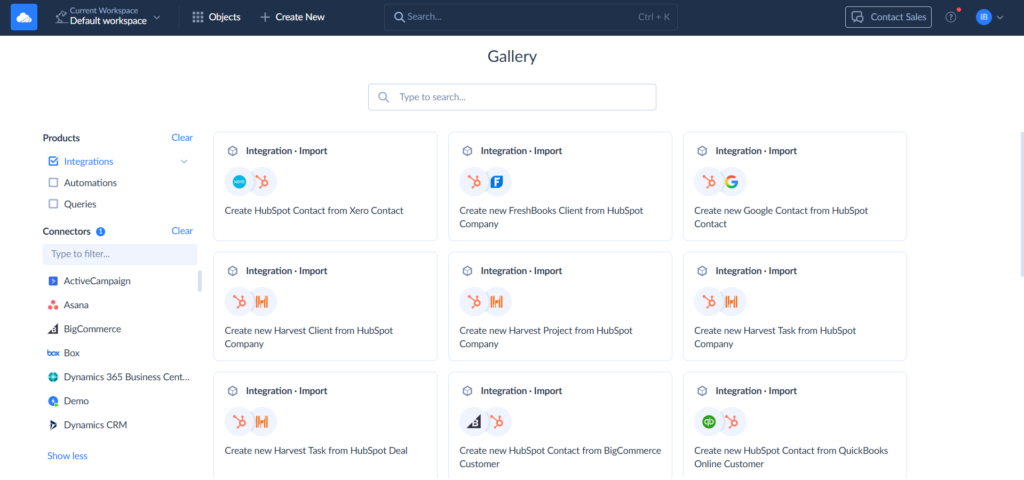
Most HealthTech teams don’t have three data engineers sitting around waiting to build a pipeline. Half the time, it’s one analyst and a warehouse that’s still empty. Skyvia is built for that team, not the one with a platform group on call.
It’s a single no-code platform for the whole job – ETL/ELT, reverse ETL, sync, migration, live data access, orchestration. It has HIPAA-aligned security designed in from the start, and pricing that scales with your data instead of your headcount.
Best for
It fits Healthcare and HealthTech organizations of any size that need HIPAA-aligned pipelines and would rather run everything through one tool than stitch together several.
Pros
- No-code and genuinely fast to launch. A visual, wizard-based interface lets analysts build data flows without writing code, with a first pipeline running in under an hour. ETL, ELT, reverse ETL, sync, and live data access live in one platform – a big part of why Skyvia holds G2’s #1 Easiest to Use ETL Tool ranking for 2026.
- Connectivity for the mixed reality of healthcare stacks. 200+ connectors reach EHR-adjacent sources, CRMs, billing systems, and every major warehouse.
- HIPAA-ready without the enterprise price tag. BAAs are available, backed by SOC 2 Type II and GDPR compliance, AES-256 encryption, TLS in transit, role-based access, and audit logs.
- Pricing that doesn’t punish growth. A real free tier covers small workloads, paid tiers scale by data volume and include unlimited users.
- Built-in transformations and a real reverse ETL path. Visual field mapping and type conversion handle most BI prep without code, and reverse ETL pushes insights back to CRMs and care tools.
Cons
- Not built for sub-second streaming. CDC polls with a one-minute minimum interval, not true log-based streaming – real-time alerts fit a streaming-first platform like Estuary Flow better.
- Cloud-only at its core, which may not satisfy strict residency needs.

Why Is Infor Cloverleaf Best for Clinical Messaging Engines and Hospital HL7/FHIR Interoperability?
Cloverleaf earned its reputation the slow way – decades of running inside hospitals where a dropped ADT message is a patient nobody told the pharmacy about. It’s HL7 depth built through repetition, not a recent pivot into healthcare.
Best for
Hospitals and IDNs where HL7 v2, FHIR, and X12 all need to talk to each other across a sprawl of EHRs and sites – and where one ADT event has to fan out cleanly to bed management, labs, imaging, and pharmacy without anyone losing an acknowledgment along the way.
Pros
- Full standards coverage. HL7 v2, FHIR R4, C-CDA, X12, DICOM, XDS – one engine instead of three.
- Enterprise-grade operations. High availability for 24/7 hospital load, real-time interface monitoring, etc.
- Compliance built in. Encryption, access controls, and audit-friendly logging support HIPAA-aligned workflows.
Cons
- The price tag matches the scale.
- Tcl isn’t a skill most engineers walk in with. It’s the primary customization language, which shrinks the hiring pool.
- Cloud-native isn’t its native language. Containerized, cloud-first deployment takes more effort than with newer, API-first engines, and migrating an established Cloverleaf estate to the cloud is rarely cheap or quick.
- Overkill below a certain size. Small clinics and startups with a handful of interfaces will feel the overhead more than the benefit.
Why Is Fivetran Best for Large Enterprise Healthcare Systems with Dedicated Data Teams?
Fivetran’s whole premise fits into one sentence: buy the plumbing, keep the plumbers for something better. A health system’s data engineers didn’t get hired to relearn Epic’s API every time it changes shape – they got hired to build models people trust. Fivetran takes the first job off their plate entirely.
Best for
Large health systems and payers already on Snowflake, BigQuery, Databricks, or Redshift, needing reliable ingestion from many sources in a regulated environment.
Pros
- 700+ ready-to-use connectors.
- Compliance groundwork in place. BAA on Business Critical/Enterprise tiers, SOC 2 Type II, ISO 27001, GDPR, plus column-level blocking and hashing for sensitive fields.
- Uptime you can point to. A 99.9% SLA, syncs down to every minute, and monitoring that catches failures early.
Cons
- Pricing gets harder to predict at scale. MAR-based billing can climb fast with volume.
- Transformation lives elsewhere. Any real modeling needs dbt or custom SQL downstream, so teams without solid SQL skills won’t get full value.
- Support depends on what you pay. Lower tiers mean slower, more generic responses; high-touch support is reserved for Enterprise plans.
- Not a clinical engine. No HL7/FHIR message brokering. It complements engines like Cloverleaf or Mirth, not replaces them. Reverse ETL exists via Fivetran Activations but is priced separately.
Why Is Estuary Flow Best for Sub-Second Streaming CDC and Clinical Telemetry?
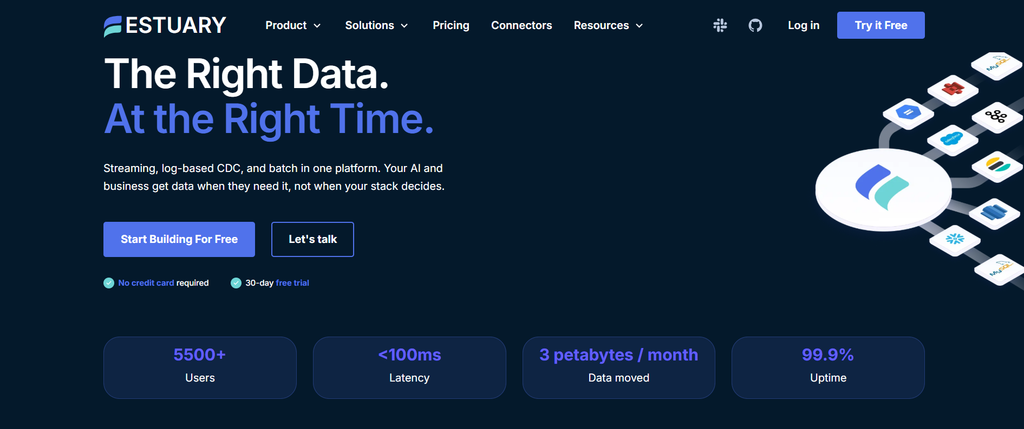
Most ELT tools ask, “How fresh does this need to be by morning?” Estuary Flow asks a different question entirely: what if the data showed up before the sentence describing it was even finished? It’s built streaming-first, moving changes the moment they happen rather than on a schedule, without asking anyone to stand up and run a Kafka cluster to get there.
Best for
Real-time clinical analytics where seconds change a decision – ICU telemetry, sepsis alerts, live bed capacity – plus RPM streams from wearables and bedside monitors needing continuous ingestion.
Pros
- Built for speed. Sub-100ms latency, exactly-once delivery, batch and streaming on one platform.
- CDC that keeps up with schema changes. Minimal source load, automatic propagation, durable collections that backfill from history.
- Transforms in flight, not after landing. Streaming SQL/TypeScript enrich mid-flight; one collection feeds a warehouse, event bus, and lake at once.
- Compliance built for more than batch. HIPAA and SOC 2 Type II, with private networking and BYOC options.
- Pricing that matches the workload. ~$0.50/GB undercuts a custom Kafka/Debezium stack, with a free tier for POC work.
Cons
- Real ramp-up for streaming concepts – collections and durable logs are unfamiliar for batch-only teams, plus the proprietary Gazette/Flow architecture.
- Strong on databases, thin on marketing or HR apps.
- Documentation still maturing, with fewer examples than established frameworks.
- Overkill for daily batch reporting, where sub-second freshness isn’t needed.
- Smaller community, fewer resources for PHI or CDM work.
Why Is MuleSoft Best for Global Healthcare Enterprises Requiring Full-Scale API Management?
Most integration tools move data from one place to another. MuleSoft governs the whole conversation – every API a global health system exposes, who’s allowed to call it, and what happens when hundreds of them need to work together across cloud and on-prem at once.
Best for
Global health systems and payers with sprawling, mixed estates – EHRs, legacy systems, SaaS, on-prem databases – that need to be exposed as governed APIs, and built as reusable layers (system, process, experience) rather than one-off connections.
Pros
- Full API lifecycle in one place. Design, versioning, policies, and deprecation in Anypoint Platform, with a portal for discovery.
- Healthcare interoperability pre-built. Accelerators for Epic, Cerner, and athenahealth, plus HL7 v2, FHIR R4, and X12, cover ADT, orders, and claims.
- Governance built for scrutiny. SOC 2, ISO 27001, HITRUST CSF, BAAs, and detailed audit logging.
- Built to be reused, not rebuilt. The system/process/experience API model cuts point-to-point sprawl, with 400+ connectors beyond healthcare.
Cons
- Pricing lives behind a sales call.
- Specialized skills required. DataWeave and Mule DSL draw a smaller, pricier talent pool.
- A lot of platform for a simple job. SaaS-to-SaaS automation doesn’t need this much machinery, and large flows can be rough to debug.
- Tilted toward Salesforce, leaving mixed-CRM organizations less aligned with the roadmap.
- Compliance depends on configuration. PHI boundaries are the customer’s job and can persist unnoticed in a stateful runtime.
Why Is CData Sync Best for Legacy Healthcare On-Premises Databases and Custom ERPs?
Not every hospital’s data lives in a shiny cloud-native system. A lot of it still sits in an Oracle instance or a homegrown billing app that predates most of the IT team. CData Sync is built for exactly that reality: pulling data out of decades-old systems without rewriting them, and doing it with minimal disruption to production.
Best for
Hospitals, labs, and payers running legacy SQL Server, Oracle, or Db2 (including AS400) that need to feed cloud analytics, plus custom ERPs and line-of-business apps reachable only through ODBC/JDBC or a proprietary API.
Pros
- Reaches systems other connectors don’t. 250+ connectors, deep support for SQL Server, Oracle, PostgreSQL, Db2, plus ODBC/JDBC for custom ERPs.
- CDC that goes easy on production. Low-latency replication, often without full DBA privileges, is good for hospital IT approvals.
- Deploys wherever data has to stay. On-prem, private cloud, or VM options, with TLS and RBAC.
- Predictable pricing. Flat licensing per connection (from ~$7,999/year).
- Low-code with SQL control. Point-and-click setup, with filtering to push logic to the source.
Cons
- Costs climb with connector count. Many low-volume sources add up fast.
- Transformations stay basic. Real modeling belongs downstream, not in this tool.
- Performance varies by source. Not every connector offers true log-based CDC; some rely on watermark polling.
- HIPAA compliance isn’t built into Sync. That’s Connect AI’s job, so PHI needs its own validation.
What Are the Top Use Cases for Healthcare Data Integration Platforms?
Strip away the vendor decks, and the top use cases boil down to three questions every health system eventually asks: Who is this patient, really, across every system that’s ever touched them? Can leadership see the numbers without seeing something they legally shouldn’t? And once the warehouse figures something out, how does that finding reach the person actually calling the patient?
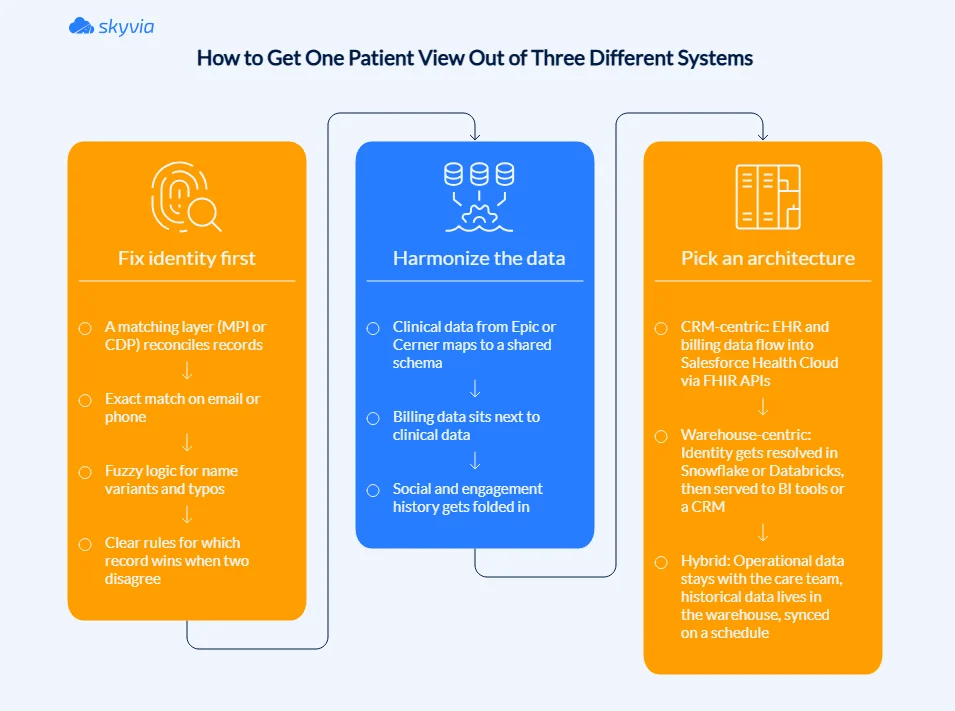
How Do Healthcare Teams Unify Billing, EHR, and CRM Data for 360-Degree Patient Analytics?
Robert Chen in billing. Bob Chen in the portal. A third, unrelated-looking ID in the EHR. Same guy, and not one system knows it, which is exactly the problem 360-degree patient analytics has to solve before anything else is worth building.
How Can HealthTech Companies Power CFO & Operational Dashboards Without Breaking Compliance?
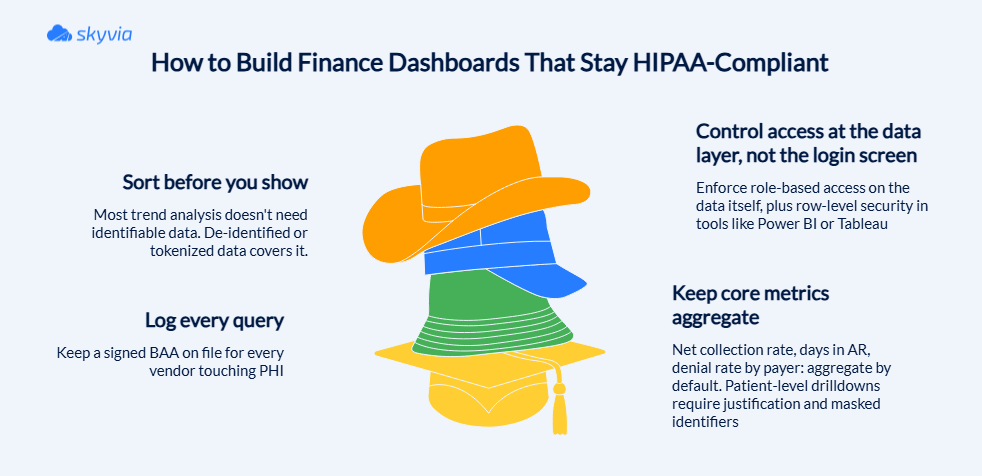
A finance dashboard wants everything. HIPAA wants “minimum necessary.” A HIPAA-compliant data integration tool for healthcare lives in the gap between the two.
How Does Reverse ETL Empower Care Teams by Syncing Warehouse Insights Back to Operational CRMs?
Reverse ETL takes analytics computed inside the warehouse (risk scores, care gaps, flags) and pushes them back out into the tools care teams use, like Salesforce or Health Cloud.
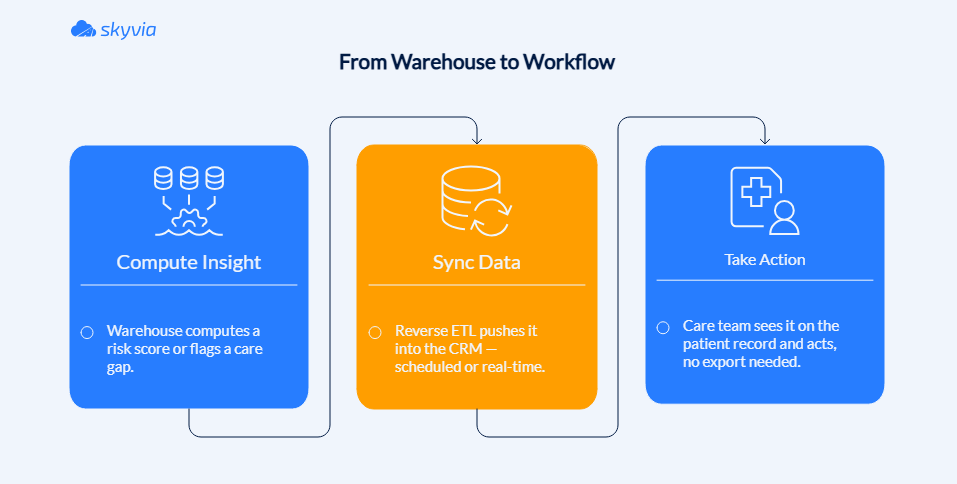
That closes the loop: instead of a care manager manually exporting a spreadsheet to act on a risk score, the score just shows up on the patient’s record automatically.
How Should You Choose the Right Healthcare Data Integration Tool for Your Team?
There’s no such thing as the best healthcare data integration tool. Only the best one for what you’re moving, at the volume you’re moving it, with the team you have. A hospital running twenty-year-old HL7 interfaces and a three-person startup shipping a FHIR app aren’t shopping in the same aisle, no matter how similar their pitch decks sound. Here’s how to narrow the field without getting talked into someone else’s answer.
Start with your workload, not the vendor list
Every category of healthcare data integration tools is built to be excellent at one thing and merely adequate at everything else. Match the tool to your dominant pattern before you match it to anything else:
| Use Case | Best-Fit Category |
|---|---|
| Low-code SaaS/CRM integration for lean teams | Low-code iPaaS – Skyvia |
| Real-time clinical messaging (ADT, orders, results) | Interface engine – Infor Cloverleaf |
| Full-scale API management and governance | API platform – MuleSoft |
| Warehouse-centric analytics (ELT) for large teams | Managed ELT – Fivetran |
| Sub-second streaming CDC and clinical telemetry | Streaming platform – Estuary Flow |
| Legacy on-prem databases and custom ERPs | Database replication – CData |
Pick your top two or three workloads, and let that shortlist do the filtering before a single demo gets booked. For example, “EHR into the warehouse for BI” plus “reverse ETL to the CRM” is a common pairing.
Make compliance a gate, not a line item
Everything else on this list is negotiable. This isn’t. If a platform is going anywhere near PHI, it needs to clear four things before it earns a second look:
- BAA that covers every environment your data touches.
- SOC 2 on file, with HITRUST as a meaningful plus for larger systems.
- Encryption that includes customer-managed key options.
- Access control down to the field level.
A HIPAA-compliant data integration tool for healthcare that hesitates on any of these isn’t a finalist, but a lesson.
Prove connectivity; don’t take it on faith
Building a connector from nothing eats precious time, which might not be on the menu. Confirm native support for your specific EHRs. Also, check standards depth, too: HL7 v2 message types, FHIR R4 resources, X12 transactions, and whatever your workload touches.
Then connect three real sources during a proof of concept and watch what happens to field mapping and error handling once actual, messy data starts flowing, not the sample dataset from the sales deck.
Size the tool to the team you have
Even the most capable platform on the market quickly becomes a dead weight if you don’t have a person who can run it. Evaluate how long it takes to stand up a first pipeline and how many hours a week it demands after that, using your team’s real skills, not the ideal-world scenarios.
Model three years of cost, not one quote
None of the numbers you can see on official pricing pages mean much until you add real and specific implementation costs. Complex EHR work often needs a systems integrator, and 20-50% of license cost in year one is a reasonable estimate, not a worst case. Add training for anything with a specialized skill requirement. Add infrastructure and egress if any part of it is self-hosted.
Load-test before you trust the SLA
An uptime number on a slide means nothing unless it’s been tested against your actual peak. Decide what latency your use case genuinely needs:
- Sub-second for telemetry and alerts.
- Minutes for operational dashboards.
- Comfortable overnight window for regulatory reporting.
Then run a load test with real volumes and break something on purpose (take a source offline, change a schema mid-sync), and watch how the platform recovers and what it tells you while it’s happening.
Bet on a vendor, not just a product
Look for a healthcare track record – how many health systems or payers run this in production, and for how long. Check retention and financial stability. Test support response times during the POC itself, not as a promise buried in the contract. Then call two or three reference customers at a similar scale and ask what broke during implementation, because something always does.
You can keep building the comparison spreadsheet and theorizing about which tool fits. Or skip straight to practice. Start Skyvia’s free trial and watch your own data move in minutes.

FAQ for Best Healthcare Data Integration Tools

What Is the Difference Between a Clinical Interface Engine and an Analytical ELT Tool?
An interface engine (like Mirth or Rhapsody) routes clinical messages in real time between systems. An ELT tool moves and reshapes data for analytics. Different jobs – engines for care delivery, ELT for insight.
Does Healthcare Analytics Require Sub-Second Streaming CDC or Scheduled Batch Replication?
Depends on the use case. Discharge alerts need near-real-time CDC. Monthly denial-rate trends don’t. Match the pipeline speed to how fast the decision actually needs to happen.
How Does Reverse ETL Improve Patient Engagement and Healthcare Operations?
It pushes warehouse insights straight into the CRM care teams already use, triggering outreach automatically instead of relying on manual exports.
How Do Volume-Based and MAR-Based Pricing Models Compare for Healthcare Data Stacks?
Volume-based pricing scales with data moved, punishing growth. MAR-based (monthly active rows) pricing scales with active records, which tends to track cost with actual usage more fairly.
Can a Lean Healthcare Team Maintain Reliable Data Pipelines Without Dedicated DevOps Engineers?
Yes, with the right tool. No-code and low-code platforms handle monitoring, retries, and schema changes automatically, so one analyst can keep pipelines running without a DevOps hire.