

Summary
- Skyvia is a strong Matillion alternative for teams that want visual, no-code pipelines, predictable pricing, and quick setup without maintaining custom infrastructure.
- Fivetran fits teams that want automated, low-maintenance EL pipelines and are comfortable with usage-based pricing.
- Airbyte is a good choice for developer-heavy teams that want open-source flexibility, self-hosting, and more control over connectors and infrastructure.
- Talend suits large enterprises that need advanced governance, complex transformations, and support for hybrid or on-premises environments.
- Stitch Data works best for straightforward cloud data replication when deep transformation capabilities are not the main requirement.
Matillion is one of those tools that can work perfectly well until the bill, the maintenance, or the pipeline volume starts getting harder to ignore.
Historical backfills are a good example. A job that looked reasonable in a small test can suddenly burn through far more credits than expected once you run months or years of data. Then you start asking whether the setup still makes sense, or whether there are Matillion alternatives that fit the workload better.
That question comes up for other reasons too. Maybe the team wants something simpler than another heavily engineered ETL environment. Maybe developers want more control over where the integration runs and how the infrastructure is managed. Or maybe the goal is the opposite: stop maintaining connectors and let someone else deal with schema changes and API updates.
There are plenty of Matillion competitors now, but they solve very different problems. Fivetran leans heavily into automation. Airbyte gives developers more control. Talend is built for much heavier enterprise environments. Skyvia focuses more on visual, no-code integration, while Stitch keeps things relatively simple for replication.
So the better question is not which tool wins overall. It is which one fixes the problem that made you start looking beyond Matillion in the first place.
Why Should You Trust This Review?
Searching for Matillion alternatives gets tiring pretty fast.
You can read three or four Matillion comparison posts and still come away with the same problem: everything sounds good. Pricing is vague, the weaknesses are buried, and the interesting stuff usually stops right before the point where real pipelines start getting difficult.
That is not very useful if you are actually trying to choose a platform.
So we took a different route here. We are the Skyvia team, which means we obviously have a point of view. We built one of the tools in this comparison, and pretending otherwise would be silly.
But we also spent more than 35 hours setting up and testing the alternatives that come up most often in these conversations, including Fivetran, Airbyte, and Talend. We looked at the parts that usually matter after the demo is over: setup effort, pricing behavior, connector maintenance, schema changes, and how much work stays with your engineers.
You will also see actual product screens and the limitations we ran into along the way.
The goal is not to prove that Skyvia wins every category. It does not. The goal is to make it easier to tell which tool fits the way your team actually works.
How Do These ETL Platforms Compare on Hard Metrics?
This is where the differences get easier to see. Pricing alone doesn’t tell you much; sync cadence, deployment model, and the amount of work left for your team matter just as much.
| Platform | Pricing Model | Fastest Documented Sync | Setup / Control Model | Best Use Case |
|---|---|---|---|---|
| Skyvia | Tiered by monthly record volume | 1 minute on Professional | Visual, no-code setup | Teams that want visual ETL/ELT without much engineering overhead |
| Fivetran | Usage-based, mainly Monthly Active Rows (MAR) | 1 minute on Enterprise; 15 minutes on Standard | Highly managed, low-code | Automated cloud EL pipelines with minimal connector maintenance |
| Airbyte | Free self-managed option; cloud plans use volume- or capacity-based pricing | <5 minutes on Core; 15 minutes on Plus/Pro; 1 hour on Standard | UI, API, CLI, and self-hosting options | Developer-heavy teams that want more deployment and connector control |
| Qlik Talend Cloud | Capacity-based, using data moved, job executions, and job duration | Real-time CDC for supported workloads | Visual design plus advanced enterprise configuration | Large hybrid environments, governance, CDC, and complex integration |
| Stitch Data | Row-based usage; Standard starts at $100/month in the US | Common replication schedules include 30 minutes; more granular cron scheduling is available on Advanced/Premium | Managed EL with relatively light transformation features | Straightforward cloud replication without a heavy transformation layer |
A couple of details are worth noting:
- Skyvia’s one-minute schedule is available on the Professional plan.
- While Fivetran reserves one-minute syncs for Enterprise and Business Critical.
- Airbyte also varies by edition, from sub-five-minute syncs on self-managed Core to longer intervals on its cloud plans.
- Talend is harder to compare with a single sync-frequency number because Qlik combines scheduled jobs with real-time CDC.
- Stitch is simpler: pricing is based on replicated rows, with more flexible scheduling available on higher plans.
Which Matillion Alternative Is Best for Enterprise & High-Volume Data?
Talend
Talend starts to make more sense when the job is bigger than moving a few SaaS sources into one warehouse.
In our testing, the interesting part was how much control you get once the pipeline becomes more complicated. You can work across cloud and on-premises systems, build heavier transformations, and keep data quality and governance closer to the integration layer.
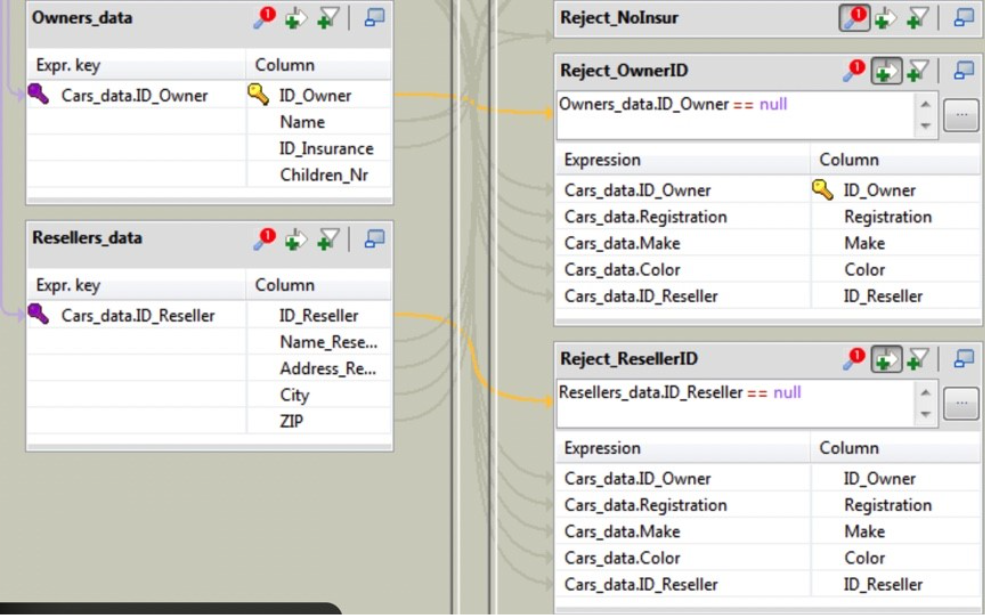
That flexibility comes with a trade-off. There is simply more to learn and configure than with a lightweight EL tool.
Best for
Large data teams dealing with hybrid infrastructure, complex transformations, CDC, or governance requirements that would feel cramped in a simpler connector-first platform.
Rating
Talend’s review profiles are a little fragmented now that Talend is part of Qlik. For the Talend Data Fabric product profile:
Qlik also now has a separate Qlik Talend Cloud profile, so I would avoid mixing ratings from different Talend products in the same score.
Pros
- Handles cloud, on-premises, and hybrid data environments.
- Supports batch workloads as well as real-time CDC.
- Stronger data quality and governance features than most lightweight EL tools.
- Gives engineers plenty of control over complex transformations.
- Fits well when integration is only one part of a broader enterprise data-management setup.
Cons
The learning curve is the obvious downside. Talend gives you a lot of knobs to turn, and that is useful when you need them. It can feel like unnecessary machinery when you do not.
The product lineup is also broader and more complex than tools built mainly around managed replication. Teams usually need more platform knowledge before they can get the full value from it.
Which Platform Is the Best Matillion Alternative for No-Code Integration?
Skyvia
Skyvia starts to make more sense when routine data movement keeps turning into an engineering task.
Sales wants Salesforce data in Snowflake. Marketing needs another field added. Someone changes the mapping. None of that is especially complicated, but it still takes developer time when every change has to go through code.
We built Skyvia around that problem, so this is also the part of the comparison where our bias is obvious.
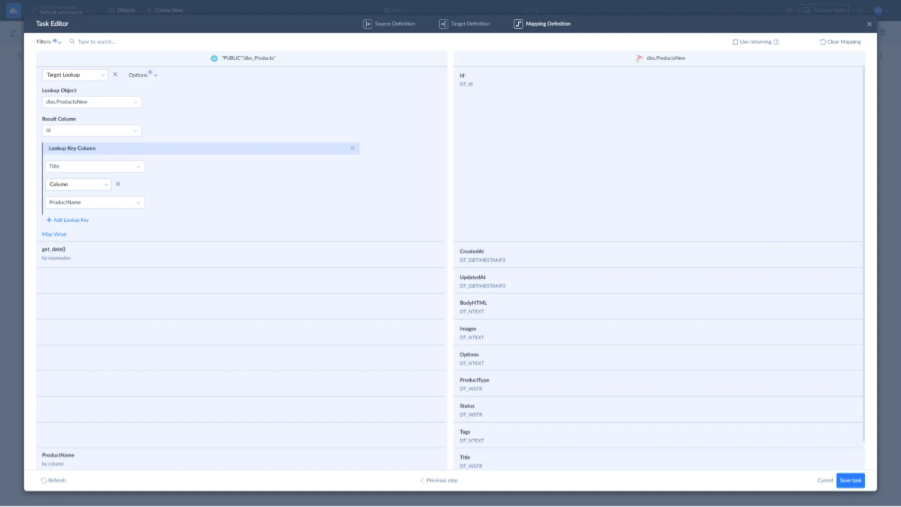
Salesforce and Snowflake do very different jobs, but connecting them does not need to turn into a coding project. Skyvia handles the setup through visual wizards and mapping designers, so you can configure the pipeline without building it from scratch. The useful part was seeing the source and target fields together, fixing mappings that didn’t line up, and running the pipeline without turning it into another development task.
Best for
Teams that want routine ETL and ELT work handled through a visual interface instead of sending every pipeline change back to engineering.
Rating
Pros
- Visual mapping keeps straightforward integration jobs out of custom code.
- Works with cloud applications, databases, warehouses, and file sources.
- Supports ETL, ELT, Reverse ETL, data synchronization, and migration in one platform, so teams do not need a separate tool for each integration scenario.
- Visual mapping supports direct field matches, lookups, and expressions, so routine mapping changes can usually be handled in the designer instead of rebuilding the integration in code.
Cons
Skyvia is a cloud platform, so it is not a fit when the integration software itself has to remain completely inside an air-gapped environment with no internet access.
That is the main boundary I would keep in mind. Teams that want to own every part of the runtime and infrastructure may be more comfortable with a self-hosted or traditional enterprise platform.

What Is the Best Matillion Competitor for Developer-Heavy Teams?
Airbyte
Airbyte starts to get interesting when the engineering team wants more control over where the integration platform runs and how its connectors behave.
We saw that clearly when testing the self-managed Airbyte Core setup. Getting it running on our Ubuntu machine took more work than a managed cloud tool, but once it was up, changing sources, destinations, and connection settings felt much more open.
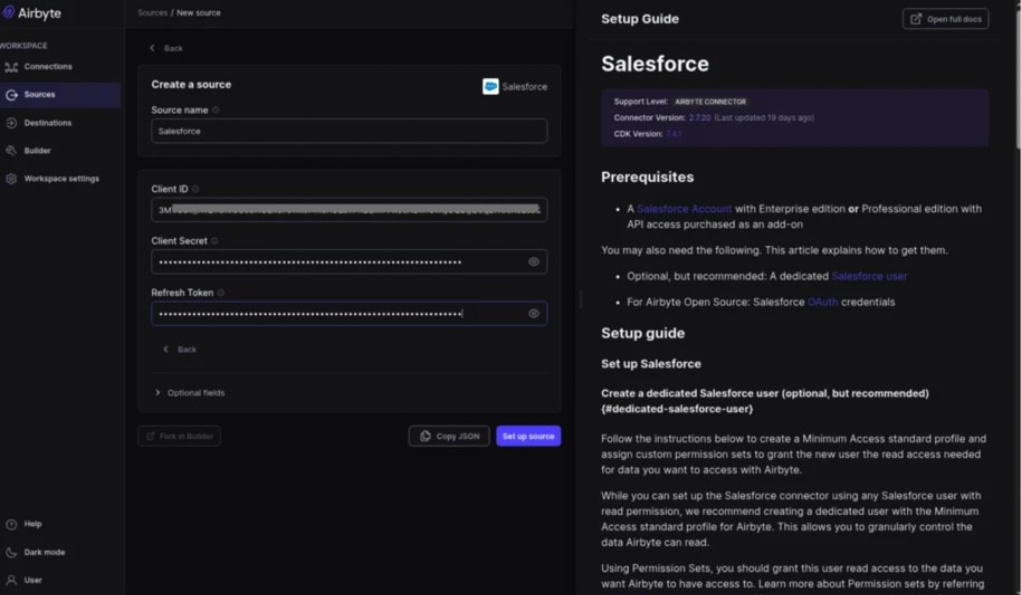
That flexibility is the attraction. You can use the UI for normal jobs, work through the API or CLI, build your own connectors, and keep the self-managed version inside infrastructure your team controls. The trade-off is that somebody has to own that infrastructure afterward.
Best for
Developer-heavy teams that want self-hosting, open-source flexibility, custom connectors, and more control over how their data pipelines are deployed.
Rating
Capterra currently lists Airbyte but shows no submitted user reviews, so I would not turn its 0.0 display into a product rating.
Pros
- Airbyte Core is open source and can be self-managed.
- Offers more than 600 replication connectors, including community and Airbyte-maintained options.
- Developers can work through the UI, API, CLI, or PyAirbyte.
- Connector Builder and CDKs give teams several ways to handle sources that are not already covered.
- Self-hosting gives engineering teams more control over where the data movement runs.
Cons
That control comes with work attached. With Airbyte Core, your team is responsible for the deployment, upgrades, monitoring, and the infrastructure underneath it.
Connector maintenance can also come back to engineering. A third-party API changes, a community connector falls behind, or a custom connector needs an update, and somebody on the team has to deal with it. For teams that mainly want the pipeline to disappear into the background, that may be more ownership than they want.
Which Matillion Alternative Is Best for Automated, Zero-Maintenance EL Pipelines?
Fivetran
Fivetran starts to make sense when the team wants the pipeline to disappear into the background once it is running.
When we changed part of a source schema during testing, Fivetran handled the new structure with very little intervention. That is the part I would pay for: less time checking connectors, fixing mappings, or wondering whether a small source change broke the load. Fivetran’s own platform positioning is built around fully managed data movement and automated schema handling.
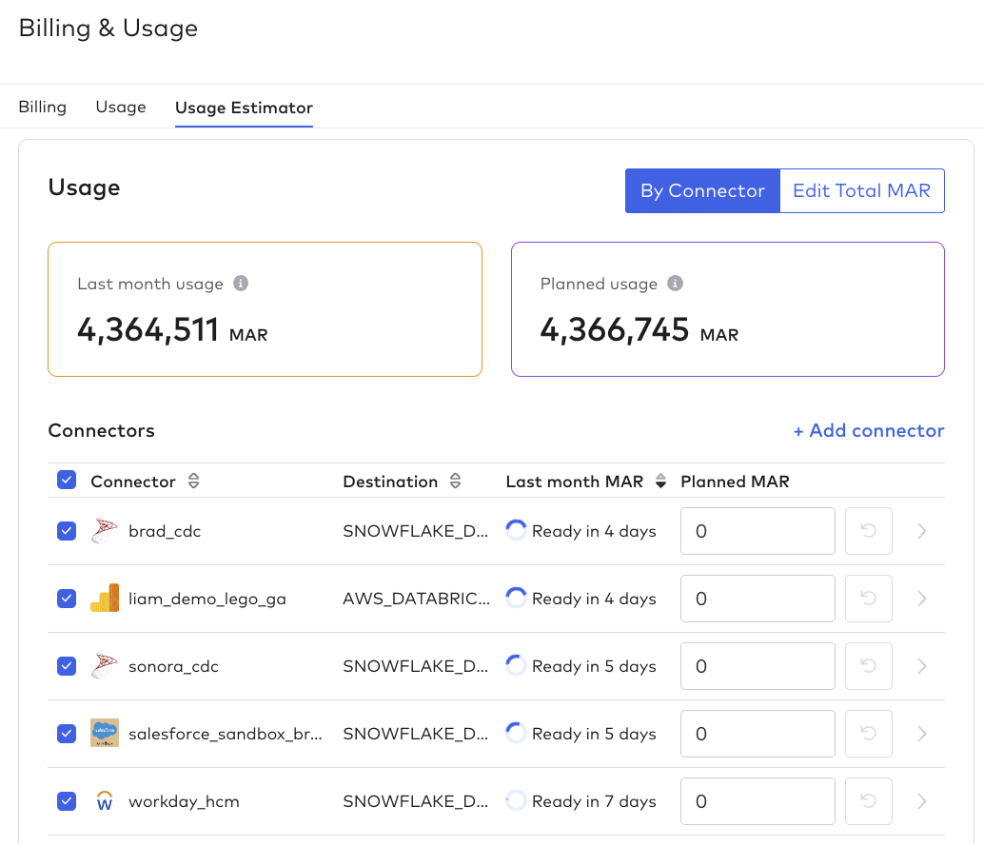
The catch shows up during larger historical loads. Fivetran bills around Monthly Active Rows, and the Usage tab tracks paid and free MAR by connection and table. A backfill can therefore change the usage picture much faster than a normal incremental sync.
Best for
Teams that want reliable, automated EL pipelines and would rather spend engineering time on analytics or modeling than connector maintenance.
Rating
Pros
- Very little day-to-day connector maintenance once a pipeline is live.
- Handles many schema changes automatically.
- Built-in monitoring, alerts, and sync history make routine operations easier to follow.
- Historical and incremental syncs are handled inside the same managed platform.
Cons
The main thing I would watch is usage. MAR can climb quickly when a connection starts touching many new or changed rows, especially during a backfill or after a paused connection resumes.
Fivetran also gives up some low-level control in exchange for that automation. If the team wants to customize every part of ingestion or manage the runtime itself, a tool like Airbyte may feel less restrictive.
Which Matillion Alternative Is Best for Lightweight Replication without Heavy Transformations?
Stitch Data
Stitch Data starts to make more sense when the goal is simple replication and not a full transformation-heavy ELT workflow.
We got Stitch running without much fuss, and for a simple replication job that was a plus. The trouble came when we tested nested JSON from a custom API. The structure did not line up cleanly, and we ended up fixing the data after it landed instead of handling everything inside Stitch.

That is really the trade-off with Stitch. It keeps replication lighter, but it is not the tool I would pick if the job depends on complex shaping before the data lands in the warehouse.
Best for
Teams that mainly need straightforward cloud data replication and do not expect the pipeline itself to handle much heavy transformation logic.
Rating
Pros
- Quick to understand and easier to set up than heavier enterprise ETL platforms.
- Good fit for straightforward replication into cloud warehouses.
- Managed service model reduces the amount of infrastructure your team has to run.
- Works well when the source data is fairly clean and the transformation happens later in the warehouse.
- Simpler overall experience than tools built for deeper orchestration or governance.
Cons
The main limitation is transformation depth. Once the source gets more complicated, Stitch starts pushing more of that work downstream.
We saw that with the nested JSON test. Stitch could replicate the data, but the schema issue had to be sorted out afterward. That is fine for a light EL workflow, but less convenient if you expect the ingestion tool to handle more of the transformation work.
Specific Use Case?
By this point, the choice is less about which tool has the longest feature list and more about what your team is actually willing to deal with every week.
If you have engineers who like owning the stack, tuning connectors, and keeping things self-hosted, Airbyte is probably the one I would look at first.
If you want the opposite — very little maintenance and a pipeline that mostly stays out of the way — Fivetran makes more sense, as long as the pricing model does not make you nervous.
For a big hybrid or on-premises environment, especially one with heavier governance requirements, Talend still has a place. It is not the lightest option, but that is not really what it is trying to be.
Stitch is easier to justify when the job is simple replication. If you do not need the ingestion layer to do much transformation, it may be all you need.
And then there is Skyvia. If your team mostly wants to get data moving without writing another script or maintaining another piece of infrastructure, that is where I would try it. The free tier makes this easy enough to test with a real pipeline before making a bigger decision.
FAQ for the Best Matillion Competitors & Alternatives in 2026
Can Fivetran completely replace Matillion?
Sometimes, but not always. Fivetran is excellent for managed EL and connector maintenance, while Matillion gives teams more control over transformation logic and warehouse-native workflows.
What is the best free or open-source alternative to Matillion?
Airbyte is the clearest open-source option. Airbyte Core can be self-hosted for free, although your team still has to manage the infrastructure, upgrades, connectors, and troubleshooting.
Which ETL tool is best for non-technical teams (marketing, sales ops)?
Skyvia is a strong fit when the team wants visual mapping and scheduled pipelines without writing code. It works especially well for routine SaaS-to-database or warehouse integrations.
Is there a scenario where we shouldn’t switch from Matillion?
Yes. If Matillion already fits your budget, pipelines are stable, and your team knows the platform well, switching may create more work than value. A migration only makes sense when there is a real problem to solve.
What is the best Matillion competitor for strictly regulated, on-premise environments?
Talend is the stronger fit in this comparison. It supports hybrid and on-premises environments and is better suited to teams that need heavier governance and more control over where integration workloads run.